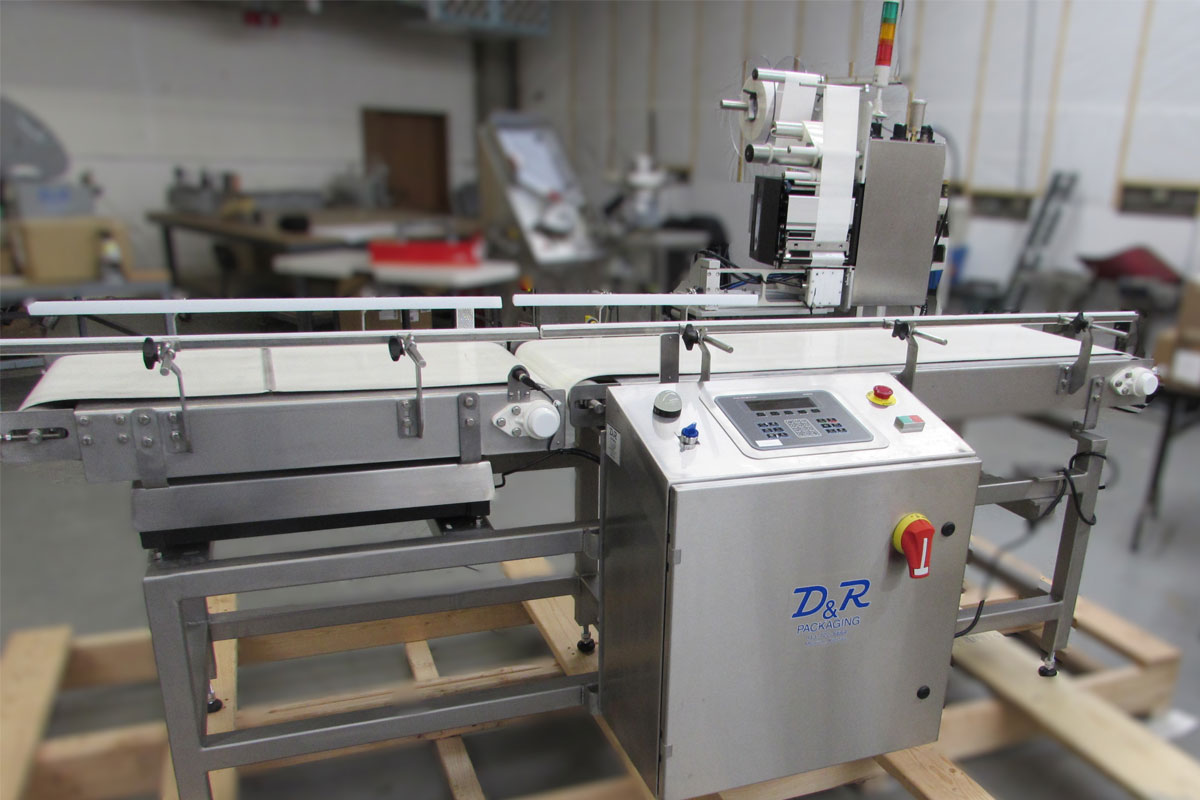
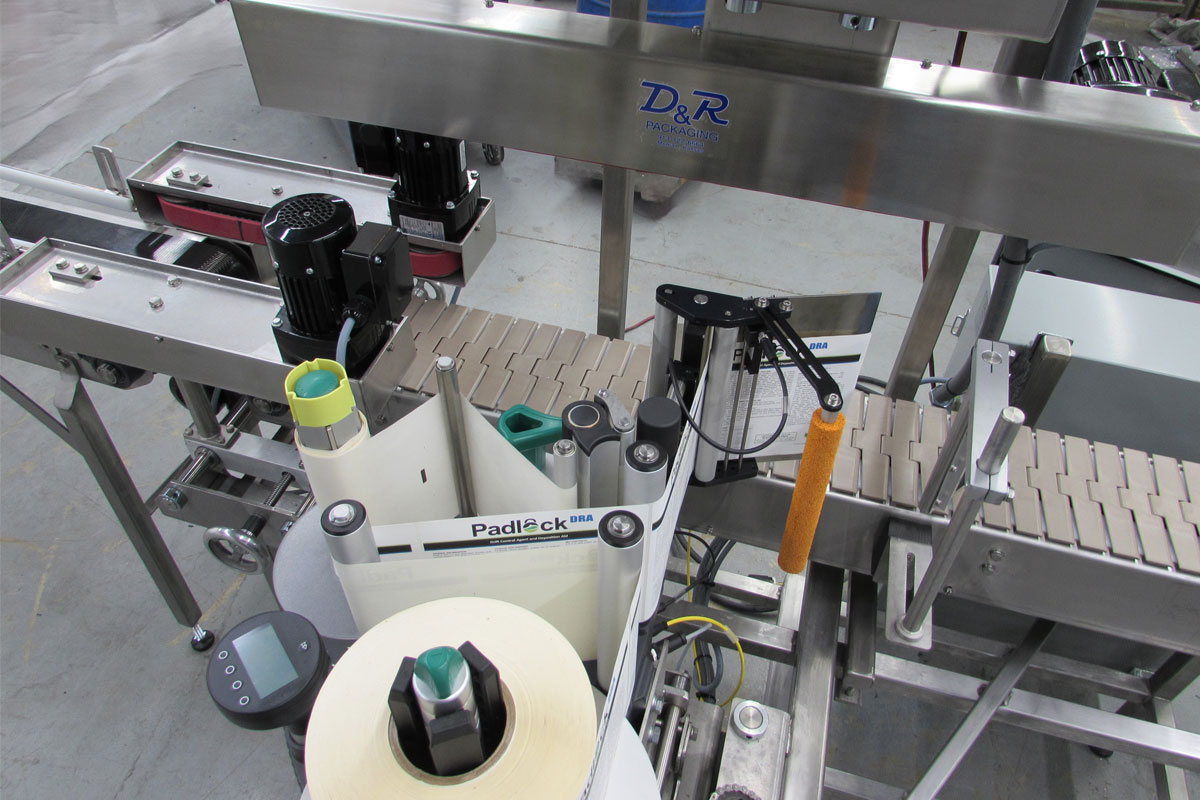
A labeler that ran perfectly for three years can become the slowest station on the line without anyone touching it. Nothing changed except the container. Most plants that call us are trying to make one labeler handle multiple container shapes and sizes. Either those containers fall inside the machine’s container envelope or they do not.
We have built and integrated labeling equipment since 1986, and the answer always comes down to how your containers are held and moved.
What Your Container Envelope Actually Is
Every labeler has a container envelope, meaning the range of sizes and shapes it runs without new tooling. That envelope is the first thing to define before comparing machines.
The Four Specs That Set the Limit
- Diameter or width. Depending on the machine, wrap stations commonly cover somewhere between 0.5 inch and 6 inches before change parts are needed.
- Height. Minimums near 1 inch and maximums between 8 and 14 inches are typical, though stability matters more than the number.
- Taper. Even a few degrees start pulling label registration off square, and the effect gets worse as line speed climbs.
- Label length and panel location. A full wrap on a 5-inch jug calls for a different machine than a spot label on a 2-ounce jar.
Adjustable, Changeable, or Incompatible
Sort every SKU into one of three buckets:
- Adjustable. Guide rails and sensor position move, no parts required.
- Changeable. Star wheels, timing screws, or wrap plates get swapped.
- Incompatible. The container needs a different machine or a second station.
Key Takeaway: The applicator is rarely the limiting factor. Container handling is where flexibility is won or lost, and timing screws are almost always SKU-specific.
How Different Types of Labeling Machines Handle Shape Changes
The different types of labeling machines each have a shape they tolerate well and a shape that fights them.
Round and Straight-Wall Containers
These are the easiest to share across SKUs. Two round bottles within the same diameter band usually need nothing more than a rail adjustment and a stored recipe change.
Oval, Square, and Flat Containers
Front and back labelers cover these well, but the container has to arrive in the same orientation every time. Orientation control is what fails on these lines, usually before the applicator does.
Tapered and Contoured Containers
Tapered bottles need an angled applicator or a tapered wrap station. Heavily contoured or waisted containers rarely share a setup with anything, and shrink sleeve or spot labeling is often the practical answer.
Pro Tip: Ask a vendor which of your specific SKUs need change parts. Nearly every machine on the market “handles multiple sizes.” The useful answer is which of your containers do not.
Changeover Time is the Real Cost
A machine that technically runs all your containers is not flexible if each switch eats 45 minutes of a shift.
The Four Changeover Tiers
| Tier | Typical time | What it involves |
| Recipe change | 1 to 3 minutes | Select stored SKU, verify first article |
| Tool-less adjustment | 5 to 15 minutes | Hand knobs, digital counters, rail width |
| Change part swap | 20 to 60 minutes | Star wheel, timing screw, wrap plate |
| Reconfiguration | 2 hours or more | Station moves, re-timing to the filler |
The Math We Run with Customers
Multiply changeovers per week by minutes each, then by your loaded labor rate plus the value of lost throughput. Compare that annual number to the price gap between one flexible machine and two dedicated ones.
In our experience, if changeover costs add up to more than that price gap within about two to three years, the second machine is the cheaper decision.
Need help sizing a labeler for your SKU list? Contact D&R Packaging for a consultation. Send your container specs and target rate, and we will tell you what fits.
Key Takeaway: Servo adjustment with stored recipes is the single biggest lever on changeover time. It moves most size changes from a change part swap down to a recipe change.
Can One Labeler Handle Multiple Container Sizes on Your Line?
Sometimes, and the answer comes down to how tightly your containers cluster.
When One Machine is the Right Call
- Your SKUs sit inside one diameter band
- You run fewer than one changeover per shift
- Containers share the same shape family
- Floor space is limited, and line speed is moderate
Can One Labeler Handle Multiple Container Shapes at High Speed?
Speed narrows the envelope. At 200 containers per minute, small differences in wall rigidity, base stability, and label tension start showing up as skew and bubbling that never appeared during the factory acceptance test.
High-speed lines with mixed shapes usually justify dedicated stations. We would rather tell you that upfront than watch a machine run at half its rated speed.
Pro Tip: Budget for change part storage and tracking. Tooling that lives on a shelf, gets damaged, and cannot be found is a cost nobody quotes, and every plant pays.
What to Send Us Before You Buy
Have these ready and you will get proposals you can compare side by side:
- Diameter, height, and taper for every SKU
- Wall material and rigidity
- Label size, material, adhesive, and panel location
- Required units per minute, per container
- Changeover frequency and who performs it
- Fill temperature and surface condition
- Conveyor height and available floor length
- Your three-year SKU roadmap
Get a Straight Answer on Your Container Envelope
Our team designs, builds, and supports labeling machinery from our shop in Merriam, Kansas, and we integrate it into complete lines rather than dropping a machine into a gap. That includes the conveyor work and inspection points that decide whether a multi-format line actually holds its rate.
Send us your SKU list and target rate. We will tell you where your container envelope ends and whether you can make one labeler handle multiple container shapes and sizes.