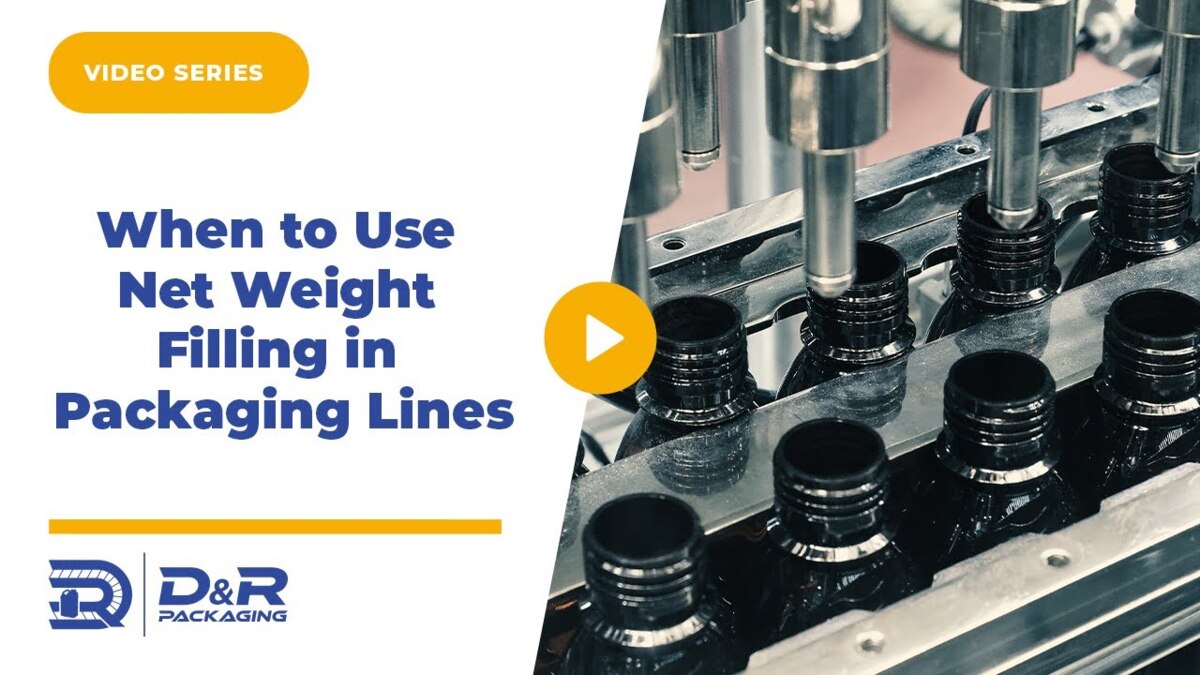
Net weight filling systems lose accuracy when the scale cannot read cleanly. Vibration, chatter, or any outside contact during the fill cycle skews weight feedback, drives rejects, and slows the line. We design scale placement so the bottle stays isolated on the load cell, the scale stays settled, and every fill stays consistent.
The Accuracy Problem Scale Placement Must be Solved
Outside Contact Creates False Weight Readings
If the bottle touches anything that is not on the scale during the fill cycle, the measurement can drift. That “drift” is not always obvious on the first bottle. It shows up as random overweight and underweight fills across the run because the scale is reading interference, not just product weight.
Our approach focuses on minimizing the likelihood of any bind on the scale and eliminating interference from outside materials not located on the scale during filling. That is how you protect file accuracy instead of reacting to problems after they show up.
Binds and Interference Reduce Repeatability
Repeatability comes from clean isolation. If the bottle binds, rubs, or picks up vibration, the scale can bounce. When the scale is not settled, the control system has to make decisions based on unstable inputs, especially as you move into low-volume fill.
Key Takeaway: If the scale is not isolated and settled, you do not get consistent fills, even with a good recipe and good product.
Scale Placement in Net Weight Filling Systems
Scales Under the Bottle Conveyors at Each Fill Station
We place the scales underneath the bottle conveyors at each bottle filling station. Each station uses a highly accurate, oil-dampened, hermetically sealed load cell capable of up to 5,000 divisions. Each load cell is protected under a stainless steel sheath to keep the weighing components secure and protected.
This placement supports a controlled fill point where the bottle sits on the load cell, and the system can read weight accurately through the fill cycle.
Bottle Handling Mounted to the Load Cell for Full Isolation
At the filling point, all bottle handling is mounted to the load cell. That means the bottle and any point of contact with the bottle are completely isolated on the load cell. During the time of filling, we lift the bottles off the conveyor so the conveyor does not add interference to the measurement.
To keep machine contact minimal, the only point of contact from the machine to the load cells is the two air hoses used to lift the bottles. That helps keep the scale isolated during fill for clean, accurate weight feedback.
Pro Tip: If your filler struggles most during small top-offs or low-volume fill, check whether the scale is truly settled and isolated at that transition point.
Need expert help with net weight filling systems? Contact D&R Packaging for a free consultation.
How We Reduce Vibration and Chatter at the Fill Point
Oil-Dampened Load Cells Keep the Scale Settled
Oil-damped load cells help reduce vibration and chatter. The goal is an extremely settled scale during the fill point so the system can hit tight tolerance accuracies every bottle in. When the scale stays settled, the feedback stays stable, and your fill control can repeat the same result cycle after cycle.
This is especially important as the machine transitions into the low-volume fill section, where small disturbances can have a bigger impact.
Two Strand Roller Chain Supports a Clean Bottle Lift Zone
We use a conveyor design with two strand roller chain to give a clean area for the bottle lift. During fill, the bottle lifts off the conveyor, which reduces interference and supports isolation. That design choice helps keep the fill point calm and predictable.
Key Takeaway: Low vibration plus isolation equals repeatable accuracy. That is what tight tolerances require.
Container Changeovers Without Moving the Load Cell
Static Load Cells Keep Calibration Consistent
For container size, the load cells are static. They never move in the machine. The load cell is calibrated, and keeping it fixed helps maintain repeatability. Moving a scale introduces variables. We avoid that by keeping the scale location consistent and adjusting the handling components instead.
Adjust Gates and Neck Locators to Center the Bottle
During changeover, you adjust the bottle handling devices to center the bottle correctly on the load cell every time. That includes the gates that place the bottle onto the scale and the neck locators. Centering keeps the bottle stable on the load cell and supports clean, accurate fills each cycle with minimal interference.
Pro Tip: Build your changeover checklist around centering. If the bottle does not land the same way every time, accuracy will drift.
Schedule a Quote with D&R Packaging
If you want consistent weights, you need a fill point that protects the scale from binds, vibration, and outside contact. That is what our scale placement and bottle handling design is built to do, station by station. Contact D&R Packaging to schedule a quote and get a system designed for repeatable accuracy in net weight filling systems.