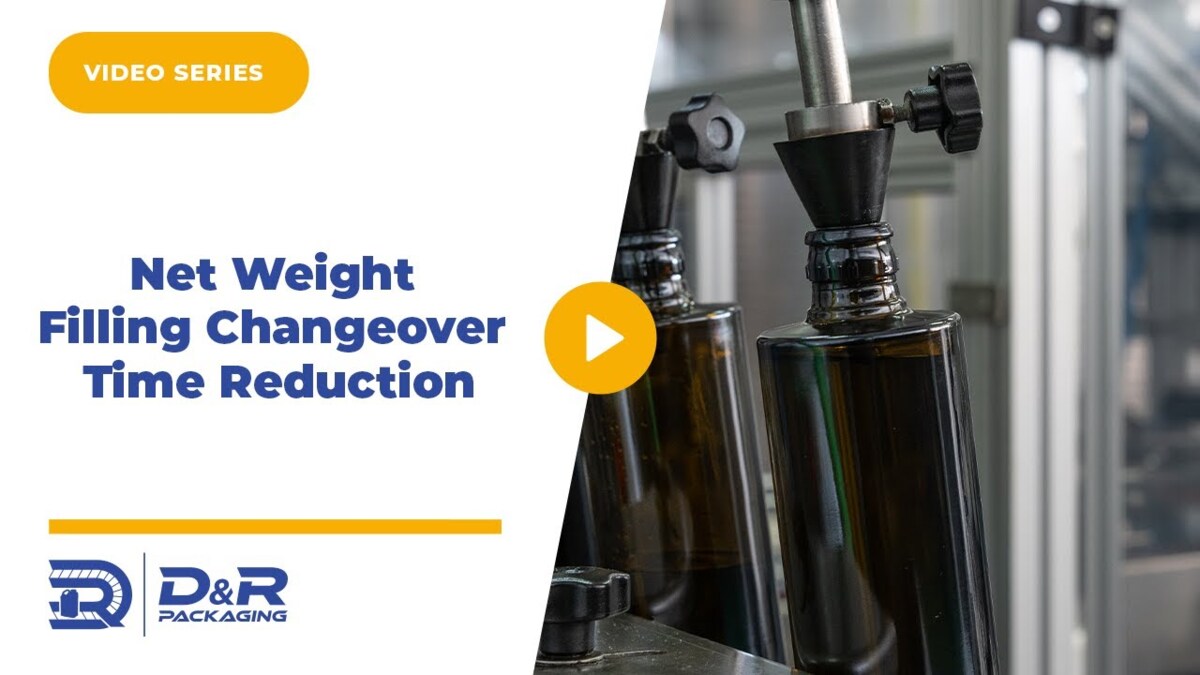
Changeovers are where most lines lose schedule control. A bottle swap or product change can stall production, create backups, and force operators into trial-and-error just to stabilize the fill again.
We use net weight filling changeover time reduction tips built into the machine design: fast bottle gating and capture adjustments, tool-less wetted parts swaps when flushing is not enough, and recipe recall that restores proven settings for quicker restarts.
Why Net Weight Filling Changeover Time Starts With Good Design
We have done everything we can in the design of our net weight filler to reduce downtime during changeovers. That includes changeovers between bottle styles, bottle volumes, products, and batches.
In a typical container or product changeover, there are two main mechanical areas to address:
- Product infeed gating system and bottle capture at the filling points
- Wetted parts changeover
When these areas are designed for fast adjustment, the operator can complete changeovers more efficiently and keep production moving.
The Two Main Mechanical Changeover Areas
The first area is the bottle handling side. This includes the product infeed gating system and the bottle capture setup at each filling point.
The second area is the wetted parts side. This includes the liquid-contact path from the inlet manifold to the nozzle tip. Both areas affect downtime, so both need to be designed for speed.
Why Changeover Speed Matters Across Different Runs
Changeovers are not only about switching products. Teams may need to change over for different bottle dimensions, different volumes, or new batches.
That is why we focus on repeatable changeover steps that operators can complete quickly with training. Faster changeovers help protect uptime across the full production schedule.
Key Takeaway: Faster changeovers come from designing both bottle handling and wetted-parts changeovers for speed, not from asking operators to work faster.
Bottle Gating Setup Tips for Faster Net Weight Filling Changeover
Our bottle-gating system uses a series of gates that are clamp-mounted to the conveyor. This setup makes adjustments easier during changeover.
The gates are adjusted based on bottle width, direction of travel, or bottle length. With a trained operator, that changeover can typically take less than 10 minutes.
Use Clamp-Mounted Gates for Quick Bottle Adjustments
Clamp-mounted gates make it easier to change bottle handling settings without a complicated process. The operator can cycle bottles and set gates to match the new container.
We use the gating system to create gaps for the fill stations. That step helps control bottle flow and supports consistent bottle positioning during the fill process.
Center Bottles Correctly at Each Fill Station
At each fill station, bottle stops should be set so the bottle neck is centered under the fill nozzles. The bottle also needs to be captured correctly in the neck locators.
That positioning step is important for fast and reliable restarts after changeover. If bottles are not centered correctly, fill consistency and uptime can suffer.
Need expert help with net weight filling changeover? Contact D&R Packaging for a free consultation.
Pro Tip: Train operators to cycle bottles through the gates during setup so they can verify bottle spacing and positioning before restarting production.
How Standard Container Design Can Reduce Adjustments
One of the most common containers we run is the F-style jug, which is widely used across the chemical industry. This helps because the container format is common and often sourced with consistent dimensions.
When containers are sourced correctly, the neck opening can stay the same diameter and in the same location relative to the leading edge of the bottle. That reduces the amount of adjustment needed during changeover.
Why F-Style Jugs Often Require Minimal Clamp Changes
With consistent F-style jugs, the neck position and opening location can stay predictable across bottle varieties. That means there is often only minimal adjustment needed to the clamps.
This is a major advantage for operations that run multiple similar containers. It helps shorten changeover steps on the infeed and bottle capture side.
Source Containers for Consistent Neck Location
Container sourcing affects changeover speed. If bottle geometry varies too much, operators spend more time adjusting gates, stops, and bottle capture points.
Consistent sourcing can make net weight filling changeover faster because the line setup stays closer from one run to the next.
Key Takeaway: Consistent container sourcing can reduce setup adjustments and help operators complete bottle-side changeovers faster.
Wetted Parts and Recipe Setup Tips To Cut Downtime
On the wetted-parts side, the quickest option may be flushing. If cross-contamination is a concern, our wetted parts are designed as change parts that can be removed toollessly and changed wholesale.
A single operator can change wetted parts from the inlet manifold to the nozzle tip in about 5 to 10 minutes, assuming the change parts are ready at hand.
Use Tool-Less Wetted Parts Changeouts When Needed
All wetted parts are designed as change parts and can be removed from the machine toollessly. This helps reduce downtime when product changes require full changeout instead of flushing.
That design supports faster product changeovers and gives operators a practical way to reduce contamination concerns without long teardown times.
Use Recipe-Based HMI Controls to Speed Repeat Changeovers
On the controls side, fill-cycle settings are stored in a recipe-based program at the HMI. For a new product, there is some setup time to determine pump speeds, target weights, and scale set points.
Once those values are set, they are stored for that product and can be recalled during the next changeover with only minor adjustments. In many cases, a full product, liquid, and setup changeover can take about 10 to 20 minutes for an operator.
Reduce Downtime with a Smarter Changeover Process
Changeover speed improves when the machine is designed for fast adjustments, and the operator has a repeatable process. Clamp-mounted bottle gates, centered bottle capture, tool-less wetted parts changeouts, and recipe recall all work together to reduce downtime.
If you want to shorten changeovers and improve uptime on your line, contact D&R Packaging today. We can help you evaluate your process and build a faster, more reliable system for net weight filling changeover.