Most plants do not lose money on the labeler itself. They lose it on the wrong labeler, the one that runs at half the rated speed because nobody checked how it would handle a tapered bottle or a cold-fill container. The different types of labeling machines all solve a specific problem, and picking one without matching it to your product creates a bottleneck that follows you for years.
We have built and integrated labeling equipment since 1986, and the questions we get most often come down to three decisions: how much automation you need, which application technology fits your label, and how your container is shaped.
Quick Comparison of Labeling Equipment
| Machine Type | Typical Speed | Best-Fit Containers | Relative Cost |
| Semi-automatic pressure-sensitive | 15 to 30 per minute | Bottles, jars, pouches | Low |
| Automatic wrap-around | 60 to 300 per minute | Cylindrical containers | Medium |
| Front and back | 60 to 200 per minute | Oval, flat, square | Medium |
| Print-and-apply | 30 to 150 per minute | Cases, pallets, trays | Medium to high |
| Shrink sleeve | 100 to 600 per minute | Contoured, full-body | High |
| Cut-and-stack glue | 200 to 1,000 per minute | Cans, glass bottles | High |
Key Takeaway: Rated speed is a ceiling, not a promise. Real throughput depends on container handling, label registration, and how well the labeler is timed to the equipment feeding it.
The Three Ways Labeling Machines Get Classified
Buyers get confused because vendors mix categories in the same sentence. A single machine can be an automatic, pressure-sensitive, wrap-around labeler. Those are three separate descriptors, not three machines.
Sort your options this way, and the choice gets much simpler:
- Automation level. How much operator involvement the process requires.
- Application technology. How the label gets onto the product.
- Product orientation. Where the label lands and how the container is held.
Types of Labeling Machines by Level of Automation
Manual and Handheld Applicators
These make sense for lab samples, rework, and short seasonal runs. Once daily volume climbs past a few hundred units, labor cost and placement inconsistency start outrunning the savings.
Semi-Automatic Labelers
An operator loads and triggers the machine, and the equipment handles application and smoothing. Good fit for contract packagers, startups, and plants running many low-volume SKUs.
Automatic Inline Systems
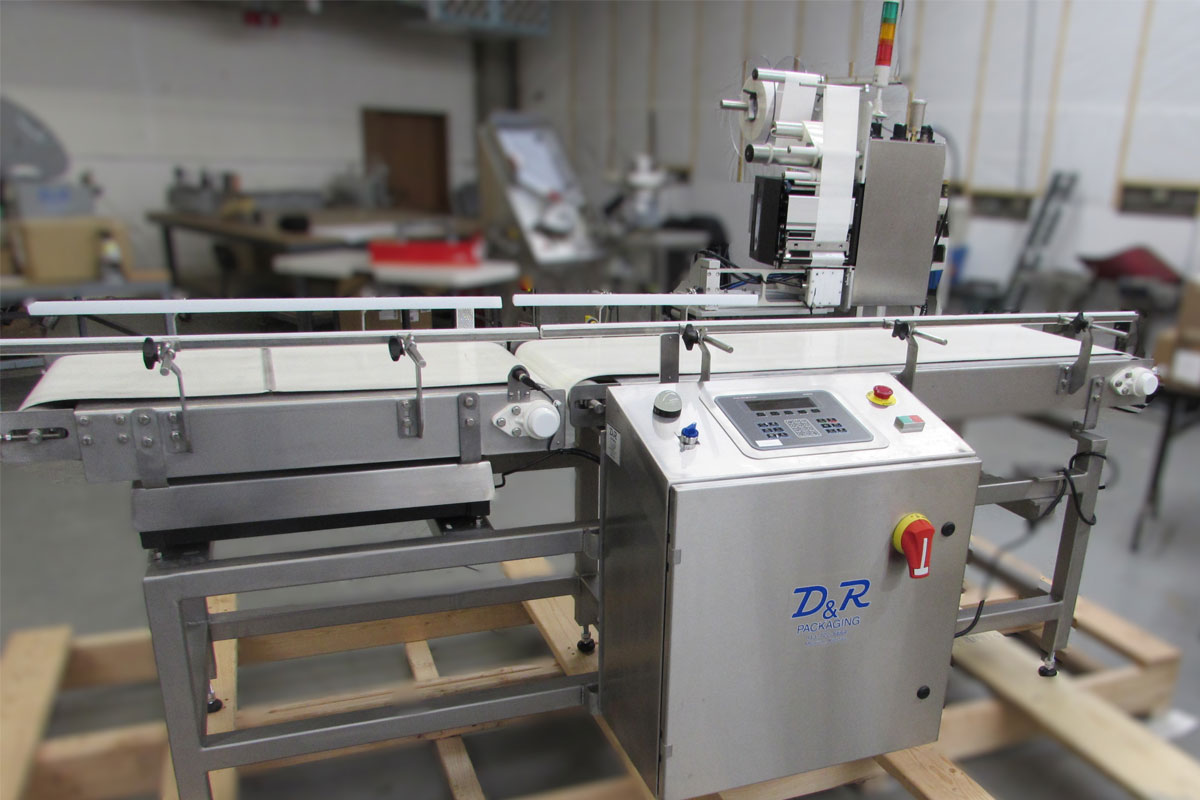
These integrate directly into a conveyor. Sensors detect the container, and the labeler applies at line speed with no handling. The parts that determine success are rarely in the brochure: timing screws, star wheels, encoder-driven placement, and a reject station that pulls bad labels before they reach the case packer.
When to Move Up from Semi-Automatic
Consider stepping up when any of these apply:
- Labeling consumes more than two operator hours per shift
- Reject or rework rates exceed one percent
- The labeler is limiting your filler output
- You are adding SKUs faster than you can train around them
Pro Tip: Size the machine for your projected volume three years out, not today’s volume. Upgrading a labeler mid-line usually means new controls and conveyor work on top of the machine cost.
Application Technology Options
Pressure-Sensitive Labelers
The default across most industries. Labels come pre-adhesive on a liner, and the machine peels and applies them with pressure. Adhesive selection matters more than most buyers expect. A permanent adhesive that holds on a room-temperature HDPE bottle can fail on a cold-fill container with surface condensation.
Print-and-Apply Systems
These print variable data and apply it in one pass. Standard for case coding, GS1 barcodes, lot and date marking, and pharmaceutical serialization. Applicator style is a real decision point. Tamp applicators handle recessed surfaces, blow-on avoids contact with delicate products, and wipe-on works well at higher speeds on flat cases.
Shrink Sleeve Labelers
A sleeve slides over the container and a heat tunnel shrinks it to the contour. You get full-body decoration, 360-degree graphics, and tamper-evident neck bands. The tradeoffs are footprint, tunnel energy use, higher material cost per unit, and growing recyclability pressure on PVC sleeves.
Glue-Based and Cut-and-Stack Labelers
Pre-cut paper labels get glued and pressed onto the container. At high volume, this is the lowest cost per label available, which is why beverage and canning operations still rely on it. It also carries the highest maintenance load of any option here.
Matching Container Type to Technology
| Container | Recommended Technology | Common Failure Mode |
| HDPE and PET bottles | Pressure-sensitive wrap | Bubbling from static or dust |
| Glass jars and bottles | Pressure-sensitive or glue | Skew on tapered shoulders |
| Cans | Cut-and-stack or shrink sleeve | Seam misalignment |
| Corrugated cases | Print-and-apply | Barcode read failure |
| Flexible pouches | Semi-automatic or top-apply | Wrinkling on soft product |
| Vials and syringes | Horizontal labeler | Roll instability at speed |
Need help spec’ing a labeler for your line? Contact D&R Packaging for a consultation. Send us your container spec, label spec, and target rate, and we will tell you which configuration fits, including whether an off-the-shelf machine will do the job.
Machines Sorted by Product Shape
- Wrap-around labelers handle cylindrical containers with full or partial wrap
- Front and back labelers apply two labels to oval or flat containers at once
- Top and bottom labelers cover lids, trays, and clamshells
- Corner-wrap labelers seal cartons and provide tamper evidence
- Horizontal labelers run vials, pens, and small-diameter items on their sides
Tapered, contoured, and lightweight containers are where standard machines fall short. Custom change parts and container handling usually cost less than replacing a labeler that never ran right.
Key Takeaway: If your container does not sit flat and stable on a conveyor, container handling deserves more of your budget than the applicator does.
What to Bring to a Vendor Conversation
Have these nine answers ready, and you will get proposals you can actually compare:
- Current and projected throughput
- Container dimensions, material, and rigidity
- Label size, material, and adhesive spec
- SKU count and changeover frequency
- Environment, including washdown, dust, or cold room
- Regulatory requirements such as FDA or GS1
- Existing conveyor height and controls
- Vision inspection and reject needs
- Expected spare parts lead time and support response
Ready to Spec the Right Machine?
A labeler that fits your product, your line speed, and your changeover schedule quietly does its job for a decade. One that does not becomes the station your operators fight every shift.
Our team designs, builds, and supports packaging equipment from our shop in Merriam, Kansas, and we integrate labeling into complete lines rather than dropping a machine into a gap. Reach out for a quote or explore our labeling machinery page to see how we approach the different types of labeling machines.