Semi-automatic filling for pails, jugs, and the bottle styles your plant actually runs.
Pail Filling Machines and Semi-Auto Filling Applications
Pail filling machines have to solve a problem bottles never create. The container is heavy, the opening is wide, the lid is a separate operation, and in most plants a person is still lifting it. Five gallons of water weighs more than forty pounds before you count the pail, and most chemical and ag products are heavier than water. That single fact drives more of the design than the fill valve does.
Our Partners

















Pails Are Not Just Big Bottles
A pail is not a scaled-up jug, and the differences are where projects go wrong after the equipment lands on the floor.
The opening changes the machine. An open-head pail takes a nozzle straight down. A tight-head pail has to be positioned so the bung lands under the nozzle every cycle.
“5 gallon” is a size class, not a dimension. Two five-gallon pails can differ in height, diameter, and taper enough to matter to tooling and the scale deck. We ask for the pail drawing, not the gallon number.
Pails taper so they nest. Good for freight, inconvenient for a fill station, because anything that centers the container works against a cone rather than a cylinder.
Bail handles swing. They interfere with locating hardware, lid stations, and labeling, and they are a common reason a line that ran fine in a demo does not run fine in production.
Somebody lifts it. An operator moves a full pail off the scale several hundred times a shift, so deck height and reach are injury and turnover decisions.


What a 5 Gallon Pail Filling Machine Has to Account For
- Open head or tight head, and whether both run on one line
- The pail drawing and bung dimensions, not the nominal size
- Whether pails arrive nested, denested, or staged
- Density range, which sets scale sizing and operator lifting weight
- Foaming behavior, which drives nozzle placement (more on foamy liquids)
- What happens to the lid, and whether jugs share the station
What we build for:
- Pail sizes: 1 to 5 gallons on a standard semi-automatic machine. Ten-gallon pails are possible, usually on a conveyorized semi-automatic machine.
- Pail styles: plastic and metal, square and round, with or without handles, and screw-top, press-fit, or crimp-on lids. Jerricans run on the same machine.
- Open head and tight head: both. We size nozzles to the opening, and our handling and gating orient the neck so the nozzle lands in the container. Offset openings are engineered to the application. On semi-automatic machines, we build cradle jigs for difficult containers.
- Denesting, lidding, and crimping: we build or integrate that equipment, up to a complete turnkey filling line.
Semi-Automatic Filling Equipment for Pails, Jugs, and Bottles
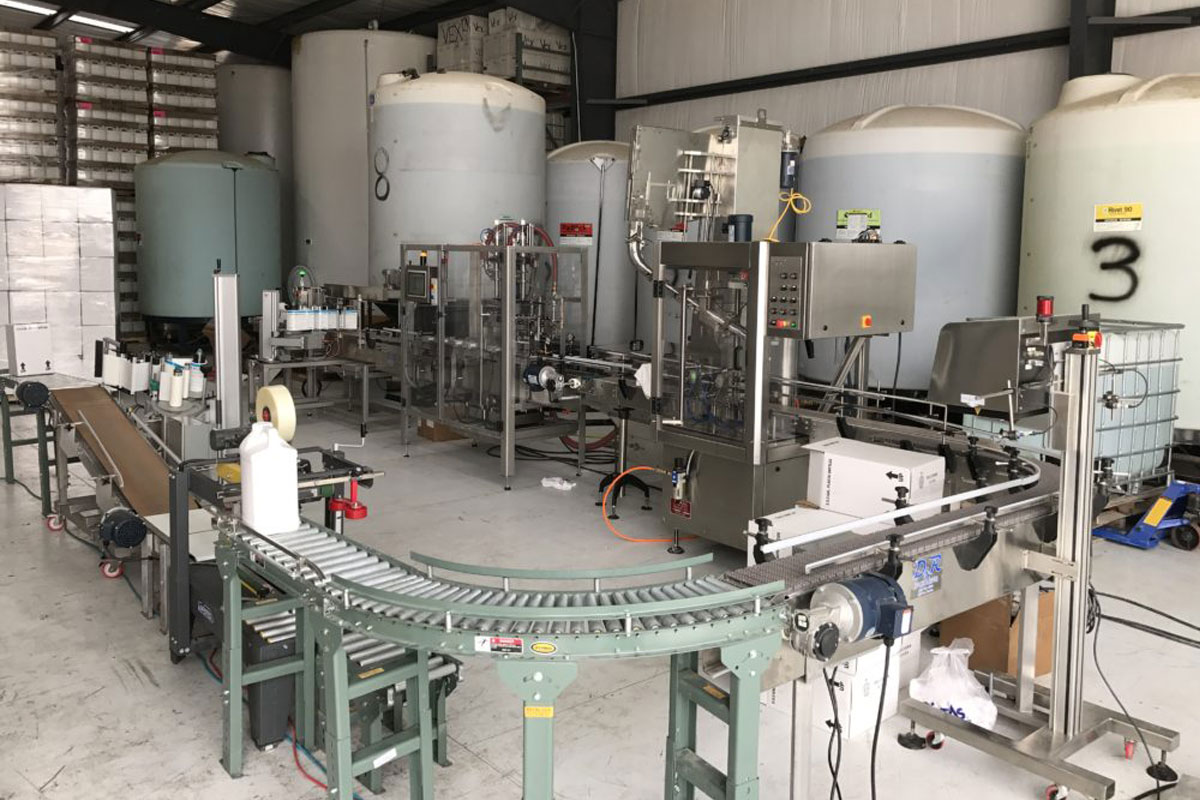
A semi-automatic filler is not a less accurate filler. The scale, nozzle, valving, and control logic match our automatic systems. What changes is who moves the container.
The operator loads the container, the machine tares and fills to target weight, and the operator unloads. That means the operator sets the pace, not the fill technology. Pails and jerricans typically run on our standard semi-automatic machine, with no dedicated build required.
Semi-automatic filling equipment fits moderate volume, a wide SKU list, or limited floor space, and it keeps capital tight while you learn your real mix. It is not a dead end either, since the filling hardware carries over when you add container handling later.
Deciding between the two? Read semi-automatic vs. fully automatic net weight filling machines. For the weighing technology itself, start with our net weight filling machines page.


Semi-Auto Filling Applications for All Bottle Styles
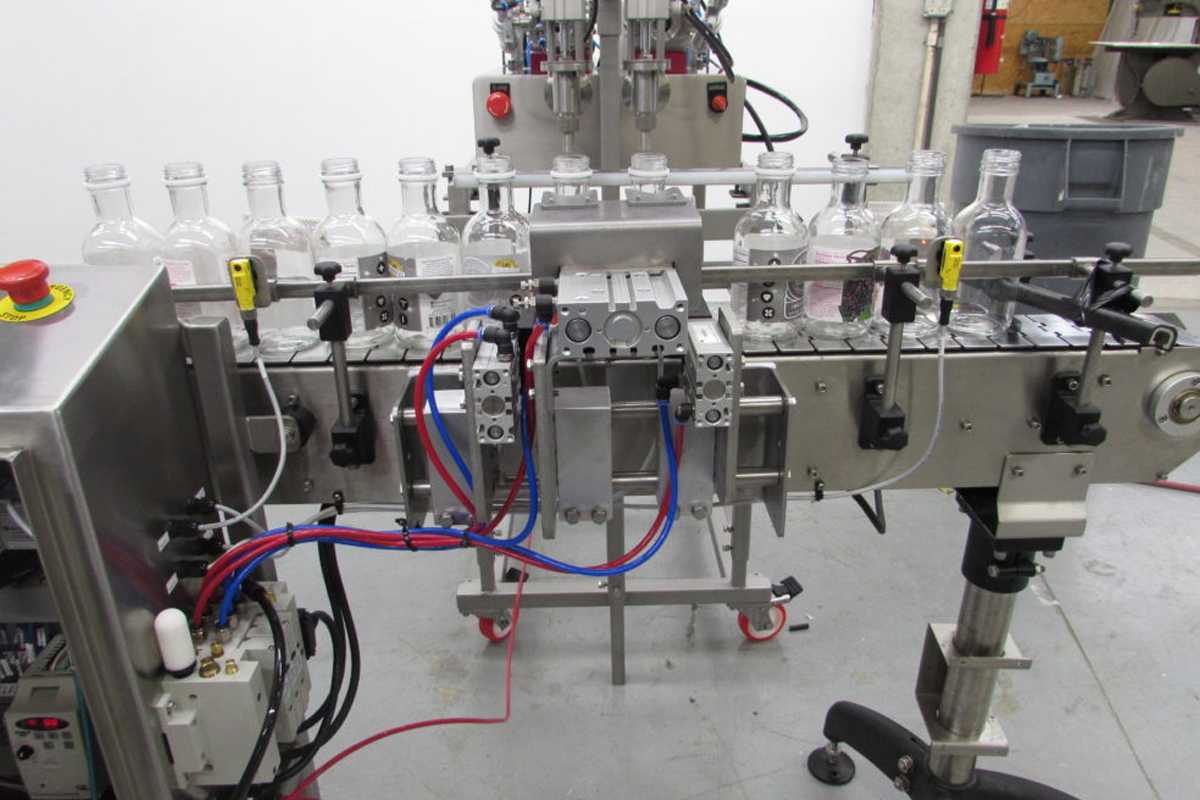
Pails are only half the picture. The same station runs the jug and bottle styles below, and the container usually decides how much of the machine has to change.
| Container | What it takes on our semi-auto station |
| F-style jugs (1 gallon and up, 63mm neck) | Our design baseline. Little to nothing beyond the standard setup |
| Other rectangular containers | Standard setup. A new length or width is a mechanical adjustment, not new hardware |
| Necks under 63mm | A smaller fill nozzle, swapped in a few minutes without tools |
| Round and non-rectangular bottles | Modified locating hardware to isolate each container on the scale, built as change parts if you also run rectangular |
| Pails and jerricans, 1 to 5 gallons | Standard semi-auto machine, with cradle jigs for difficult containers |
| 10-gallon pails | Usually a conveyorized semi-auto machine |
More detail on container fit: what containers work with a net weight filler. Filling drums or IBC totes instead? See our custom tote filling equipment.
Where High-Mix Pail Lines Quietly Lose Money
Three costs rarely make it into a quote comparison.
Giveaway on every container. When a plant is not confident in its fill, the fix is to overfill on purpose. On a large container, that runs on every unit for the life of the product. The mechanics are in tare weighing in net weight filling.
Changeover time nobody counts. Many SKUs through one station means paying for every changeover in minutes that never appear on a spec sheet. Toolless wetted parts and recalled recipes beat a faster fill cycle on a high-mix line. See changeover time reduction tips.
Density that will not sit still. Temperature, batch, and solids content all move density. Fill by volume, and the finished weight moves with it, which starts the loop of pulling a container, weighing it, and adjusting. Filling on a scale removes the loop. More on how net weight filling handles density changes.
If your density moves, your mix is wide, or your product is hard on pistons and meters, weighing is the answer. Run one easy product at stable density and speed, and we will tell you a simpler filler is the better buy.

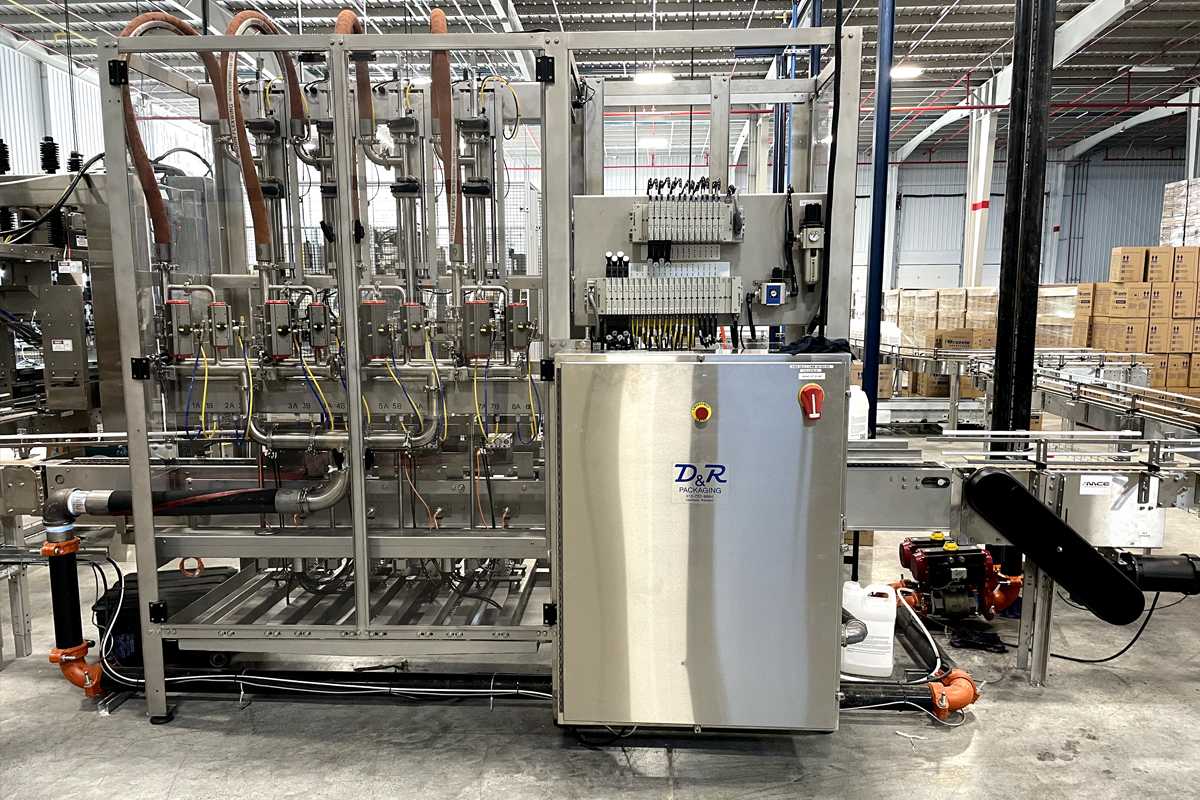
Why Manufacturers Choose D&R for Pail Filling Machines
- We take the applications other builders decline. Products that stratify, carry particulate, or behave differently in the morning than in the afternoon, and containers nobody stocks tooling for. If two vendors have already passed, that is usually where we get interested. Start with our custom conveyor solutions.
- High-mix is the default, not a special case. We design around recipe recall, how fast the wetted path comes apart, and how many parts an operator swaps between containers, because that is what a plant running dozens of SKUs lives with every day.
- We design and build rather than resell. The station is engineered here, so wetted parts, container handling, and controls are built around your product and your pails instead of a catalog model number.
- One company designs, builds, wires, and starts it up. Engineers, fabricators, and controls people work in the same building, so there is no vendor chain to arbitrate mid-project. When the filler is one piece of a larger job, our turnkey integration group owns the whole line.
- You get the owners. D&R is family-owned and operated, and the owners are personally involved in each project. When a line goes down at 6 a.m., you are talking to people who know your machine.
- Built here and supported here. Machinery and parts are fabricated in the USA, and spare parts come from the same shop that built your frame. Supporting your equipment in year eight does not depend on an overseas supplier still stocking a part.
How a Pail Filling Project Runs With Us
1. A Call and a Concept
A short conversation is enough to start a budgetary quote. We come back with one or more concepts and the pitfalls of each, not a push toward the biggest machine. On pails, that often means a semi-automatic station instead of a conveyorized line.
2. Samples and Container Drawings
Send product samples and your actual pail and bottle drawings. Density, viscosity, and foaming set the wetted parts and fill method; the drawing sets the locating hardware, nozzle, and scale deck.
3. A Site Visit
We look at how empty pails reach the station, where the operator stands, how lids are handled today, and whether your fluid supply can feed the filler, a step most quotes skip.
4. Scope Lock and Final Quote
Container range, fill method, station count, and downstream equipment get written down. Deciding now whether jugs and pails share a station is far cheaper than deciding later.
5. Build, Test, Install, Support
We build and integrate here, load your products as recipes, and run a factory acceptance test before shipping. On-site, we dial in setpoints against your real product, then you have parts, troubleshooting, and phone support.
We can work alongside your engineering and maintenance teams or run the project for you. Either way, we flag the risks early: operator safety, lifting and reach, maintenance access, and whether the line holds rate with a person in the cycle.


What Goes Around the Filler
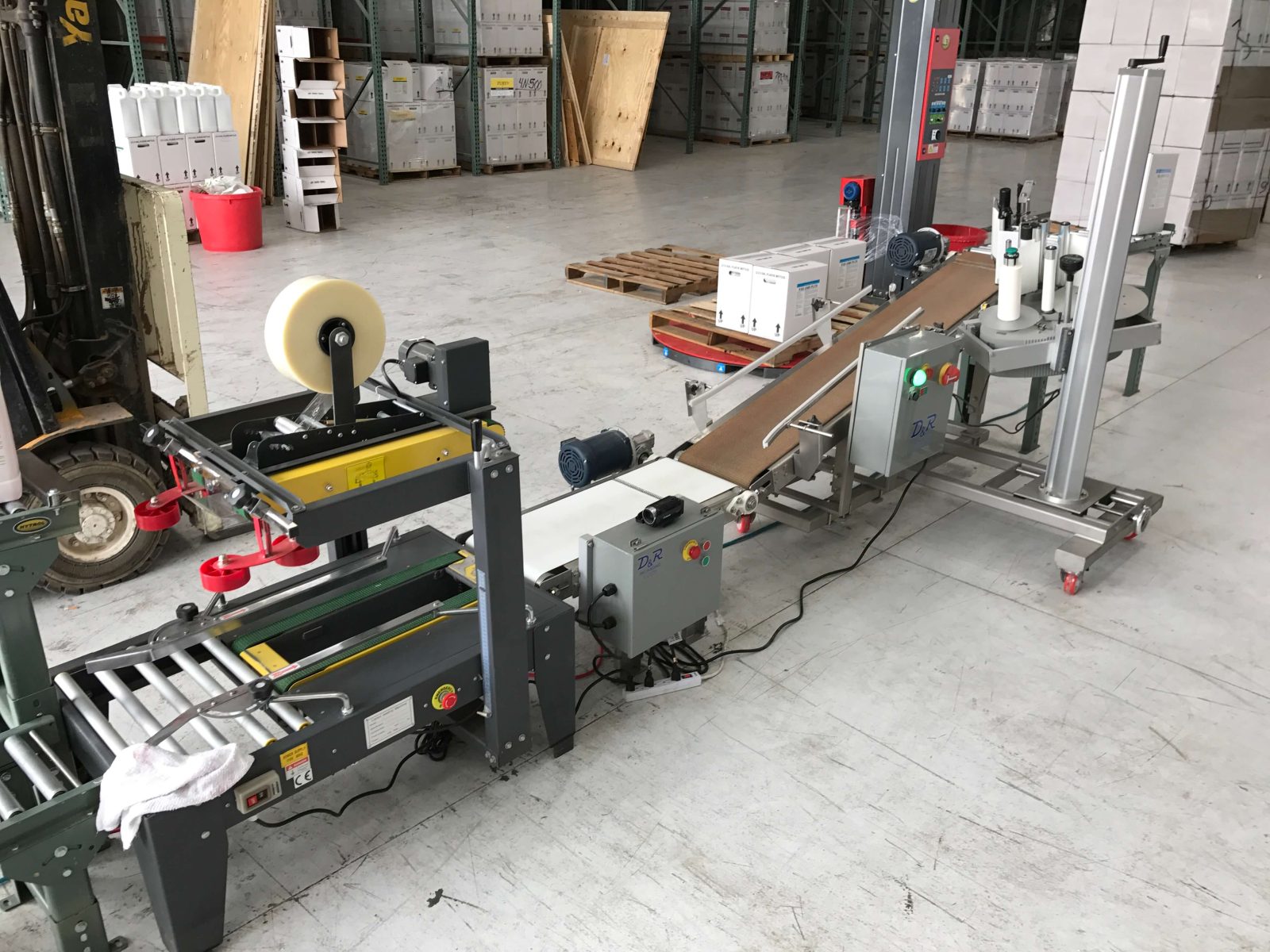
A fill station that hands off to a bottleneck has not solved anything. We design and integrate the equipment on both sides of it:
- Conveyors, custom and standard for infeed, accumulation, and discharge
- Labeling machinery for product labels, batch coding, and panel labels on jugs and pails
- Inspection and checkweighing equipment to verify weight before product ships
- Systems engineering and controls to tie the station into the rest of the plant
- Turnkey integration when you want one company accountable for the whole line
More on why that matters: common problems turnkey integration eliminates on a packaging line.
Industries We Serve
- Chemical, where frequent product changes and material compatibility drive the design
- Ag chemical, where net contents obligations are tight and systematic overfill gets expensive across a season
- Bakery and snack food and pet food, where pails and jugs often carry bulk ingredients between processing steps
- Beverage, for concentrates, syrups, and bases
See the full list on our industries we serve page.


Related Filling Equipment
- Net weight filling machines: semi-automatic and automatic inline fillers, with a full selection matrix.
- Tote and drum filling equipment: custom, application-specific systems for IBC totes and drums.
- All filling solutions: an overview of every filling system we design and build.
See What Our Clients Say
"EGE Products is an Ag Chemical manufacturing company, and D&R Packaging has been an integral part of our success.
Working with D&R Packaging on our Dual Automated packaging lines is simple and cost effective with their full service program including design, installation, and on-going support.
The customer service at D&R Packaging is top tier. They are available whenever I call and can provide excellent assistance with repairs, trouble shooting, and part acquisition. D&R Packaging goes out of its way to provide a quality product and to keep it running."
Jedidiah B.
Alex P.
John F.
Jim C.
"EGE Products is an Ag Chemical manufacturing company, and D&R Packaging has been an integral part of our success.
Working with D&R Packaging on our Dual Automated packaging lines is simple and cost effective with their full service program including design, installation, and on-going support.
The customer service at D&R Packaging is top tier. They are available whenever I call and can provide excellent assistance with repairs, trouble shooting, and part acquisition. D&R Packaging goes out of its way to provide a quality product and to keep it running."
Jedidiah B.
Alex P.
John F.
Jim C.
Pail Filling Machine FAQs
A pail filling machine dispenses liquid into pails, jugs, or similar containers and stops automatically at a target amount. Most industrial units fill by weight using a scale under the container, which handles product variation better than filling by volume.
In packaging, a pail is a heavier-duty container with a matched lid that can qualify as a shipping container, while a bucket is a general-purpose open-top container. Plants use both words for the same five-gallon container, so we work from your container drawing rather than the term.
Our standard semi-automatic machine fills 1- to 5-gallon pails and jerricans, plastic or metal, square or round, open head or tight head. Ten-gallon pails usually run on a conveyorized semi-automatic machine.
The operator places the empty container in the fill station and starts the cycle. The machine tares the container, fills to the target weight, and stops; the operator removes the full container and stages the next one.
Often, yes. How cleanly it works depends on the size spread between the containers and how often you change over, which is the kind of trade-off we work through during design.
Yes. Semi-automatic stations use the same scales, nozzles, and valving as our automatic machines, so the fill itself is not the compromise. What you trade is throughput, because an operator is loading and unloading.
Rate depends on product flow, the pump and supply feeding the machine, container size, and how many stations you run. On a semi-automatic station, the operator sets the pace, so we size the system to a rate you define during scoping. More on filler speed.
Cost is driven by automation level, container range, materials of construction, and how much of the surrounding line is included. As a rough anchor, a semi-automatic station typically costs about half as much as a fully automatic conveyorized line. Pricing starts with an application review.
When you are filling flammable liquids, yes. OSHA 29 CFR 1910.106(e)(6)(ii) requires the nozzle and container to be electrically interconnected for Category 1 and 2 flammable liquids and for Category 3 liquids with a flashpoint below 100°F, and NFPA 77 is the reference practice for static control more broadly.
Often, yes, including machines built by other manufacturers. Obsolete controls, worn fill hardware, and undersized scales are all replaceable, and a controls upgrade on a mechanically sound machine is often the fastest way to get years back out of it.
We do. Our shop is in Merriam, Kansas, just outside Kansas City, and we design, build, install, and support equipment for manufacturers across North America. Learn more about D&R.
Let's Look at Your Application
Send us your product, your container drawings, and your SKU list, along with the part of the application that has been giving you trouble. That last one usually tells us the most.
We will tell you what we would build, what it would take, and whether a simpler machine would serve you better. Call (913) 722-6664 or request a quote to scope custom pail filling machines built for your containers, your products, and your line.