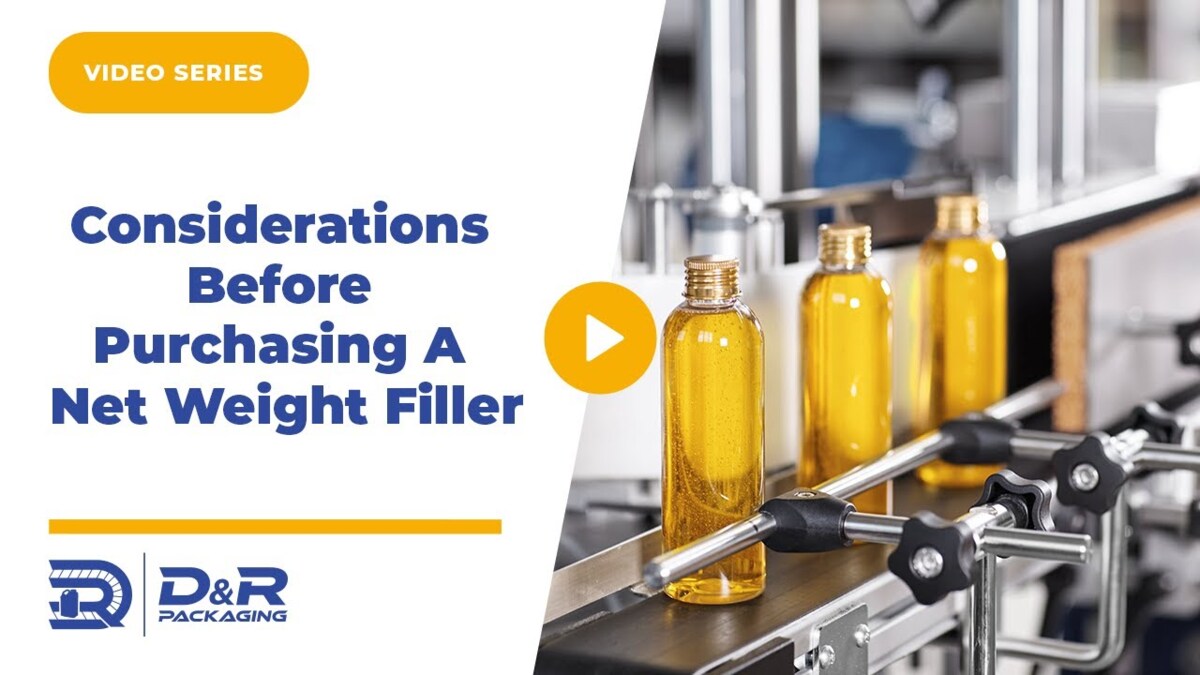
A net weight filler controls the fill by measuring weight, not time or volume. Each jug is isolated on its own scale, verified in position, and filled while weight is monitored in real time. If the system detects a problem, filling stops automatically. This approach improves accuracy, reduces product loss, and keeps the filling process stable across different containers and products.
How A Net Weight Filler Runs One Complete Cycle
Queueing, Separation, And Alignment
The conveyor moves bottles into the machine and stages them in a queue. After startup, the system automatically separates the first two jugs and moves them into two filling positions. The machine mechanically aligns the jugs with the filling nozzles, verifies jug position, and lifts each jug to fully isolate it on the scales.
Scale Isolation And Verified Nozzle Position
After the bottles are raised, the nozzle is lowered into the neck of each bottle. The machine checks the position of the bottle and the nozzles again. If everything is in the correct position, the filling valves open and liquid begins flowing into the jug while the weight is continuously monitored.
Key Takeaway: This process measures fill by weight on isolated scales and verifies position before product flows.
Monitoring, Protection, And Foam Control
Real-Time Weight Checks And Automatic Stops
As fluid flows into the jug, the weight is continuously monitored. The machine watches for abnormal weight changes, including flow with no weight gain, which can indicate a leaking bottle. It also watches for excessive, unexpected weight gain, which can indicate outside influence on the scale. If anything abnormal is detected, the machine stops all liquid flow and alerts the operator.
Consistent Nozzle-To-Liquid Distance
When liquid is flowing normally, and weight gain is as expected, the pneumatic servo on the nozzle lift activates to maintain a consistent distance between the nozzle discharge and the top surface of the fluid. This minimizes splash and foaming of product, helping the fill stay controlled as the container level rises.
Need expert help with your net weight filler setup? Contact D&R Packaging for a free consultation.
Accuracy And Throughput Features That Matter
Two-Speed Filling For Best-In-Class Accuracy
When the weight in the bottle reaches a predetermined fast-fill set point, the larger fast-fill valve closes, and the smaller slow-fill valve remains open. Two-speed filling helps maximize run rates while still achieving best-in-class accuracies. When the target weight is satisfied, all valves close, the nozzle returns to its home position, and the bottle is lowered onto the conveyor for discharge.
Overlapping Cycles To Keep Bottles Moving
This completes one cycle, and the next cycle begins at the same time. As full bottles discharge from the machine, the next bottles are conveyed into the filling stations. This overlap supports steady throughput because the machine is preparing the next fill while completed bottles move out.
Pro Tip: Use the machine’s stop-and-alert behavior as an operator standard. When an alarm occurs, check container integrity and scale influence first before restarting the flow.
Container Flexibility, Footprint, And Changeovers
Container Range Designed Around Customer Jugs
D&R Packaging designs its inline net weight filler systems to handle containers from one pint up to two-and-a-half-gallon F-style jugs, and to match the customer’s preferred jug style. The machines also fill many container types, including pints, 10 L-style bottles, and carboys.
Compact Layout With Practical Inline Advantages
An inline net weight filler design supports lower initial costs, a compact footprint, ease of integration of additional automation, shorter changeover times, lower installation costs, and easier cleaning with more complete sanitation between products. All wetted parts can be changed in about 10 minutes by an operator. The inline system, whether two-head or four-head, can fit in about 30 square feet of plant floor space, including the electrical panels and conveyor.
Key Takeaway: Fast wetted-part changes and a small footprint make it easier to run multiple products and support sanitation between runs.
A Controlled Fill Process Built For Repeatability
A reliable filling operation depends on repeatable checks, accurate weight monitoring, and fast recovery when something is off. With verified jug and nozzle positioning, isolated scales, continuous weight monitoring, pneumatic servo foam control, and two-speed filling, you get a cycle designed for throughput and accuracy in a compact inline layout.
Schedule a quote with D&R Packaging today if you want a system that fits your line and delivers consistent results with a net weight filler.